Designing your own home’s exterior can be both exciting and deeply rewarding. It’s something that can give you a unique sense of pride every time you pull into the driveway.
With so many moving parts, though, it’s completely normal for the process to feel overwhelming, especially considering how expensive it all is.
But with a clear plan and a thoughtful approach, you can navigate the design process with confidence, and create an exterior you’ll love for years to come.
So to help you avoid those home exterior mistakes, here are my top 5 things to avoid when designing your own home’s exterior. Cause I got you!
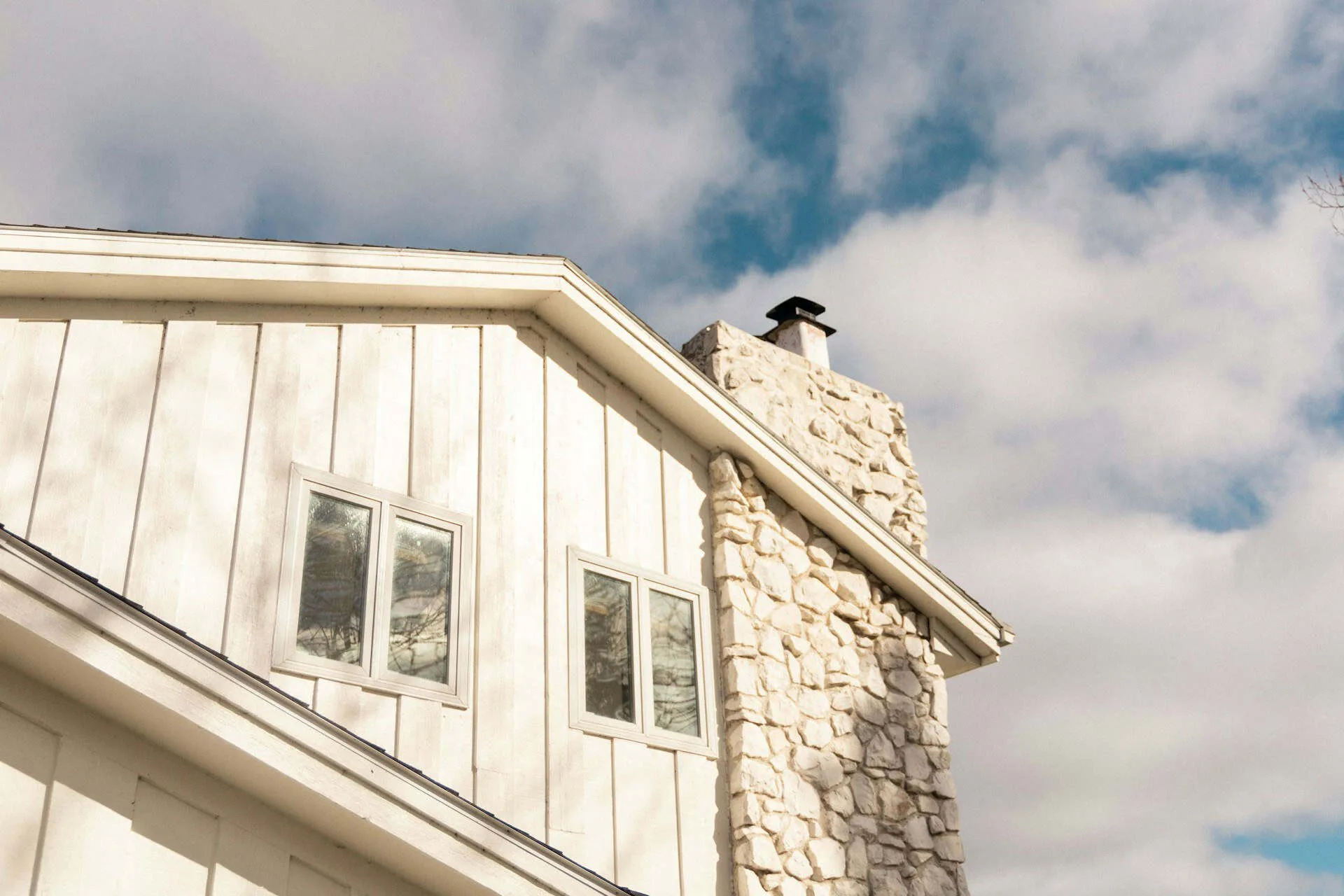
Header photo by Hans via Unsplash
Table of contents
- Mistake No. 1: Not defining the scope at the beginning
- Mistake No. 2: Ignoring the architectural style of your home
- Mistake No. 3: Relying on AI renderings or Chatbot answers
- Mistake No. 4: Selecting something that doesn’t make sense for your Climate
- Mistake No. 5: Not properly documenting your final selections
- Avoid These 5 Common Home Exterior Mistakes
Mistake No. 1: Not defining the scope at the beginning

Photo by Salman Saqib via Unsplash
The scope of your project is a basic list or outline of every single thing you want to change during this renovation. On a new-build, it’s everything, right? But on a renovation, it’s probably limited to a few select surfaces.
It’s extremely important to write that down before you get started, and to get everyone to agree to it, because big home projects like this have a tendency to snowball after they get started.
And if you get into the project, and decide to add things after you’ve already started, it can get very expensive, very quickly.
Because your builder is going to charge you extra for making the change on TOP of what the change actually costs. This is called a Change Order. You want to avoid these as much as humanly possible. Case in point: I once knew a General Contractor who named his yacht “Change Order”. His YACHT. So keep that in mind.


How to define your project scope
To define your project scope, write down three main things:
- What has to change because it’s damaged or unsafe (probably the reason you’re taking all this on)
- What you want to change because you don’t like it
- What is also affected by your answers for 1 or 2. This is where it’s easiest for things to get out of hand!
This is also the order I’d prioritize time, effort and most importantly, budget.
As an example:
A homeowner needs new windows because some of them have stopped functioning and cannot be repaired. (That’s number one.)
They also have always hated the front door the last owner put on the house and want to change it. (That’s number two.)
But, they have stucco siding, and changing out windows and doors will cause some significant repair work after the old door and windows are removed. They’ll need to at least re-paint the entire exterior to blend in the repairs. (Here we go with number three.) Do they want to keep the same color? Aside from color, do they want a new siding finish? Or should they keep the old? Do they also want to add more trim? And should they update the garage door to match the new front door?
You can see how number three can really spin you out. So have a broad conversation before you get started, narrow down to what you want, and have everybody agree to it.
Then, and this is the hard part, stick to it! Otherwise, you get into the expensive world of those mid-project change orders.
And if you’re working with a general contractor, the scope is going to be the very first question they ask you.
Here’s a worksheet to get you started.

Click here to download this PDF.
Mistake No. 2: Ignoring the architectural style of your home

Photo by Matt Hardison via Unsplash
Any exterior design is made up of two separate parts: the Architectural style, and the Detail style. On the best designed homes, these styles match.
What is the Architectural style? This is the baked-in style of the underlying structure of your home which is harder to change.
It includes things like:
- Overall footprint shape
- Roof line shape & overhang style
- Wall heights & width
- Window size & shape
- Built in features like courtyards & planters
Architectural style is typically the word that comes second in the description of your home: Storybook RANCH, Mid-Century MODERN, English COTTAGE.
What is Detail style? This is the style of the finishing touches of your home that are simpler to change.
Exterior Detail Style includes things like:
- Siding shape & size
- Window details like grids & function
- Accents like doors, trim, hardware & lighting
- The colors of everything
Detail style usually comes first in the description of your home: STORYBOOK Ranch, MID-CENTURY Modern, ENGLISH Cottage.
Why sticking with the Architectural style of your home is important
Selecting colors & finishes that are outside the underlying Architectural style of your home is the easiest way to make it feel cheap, amateurish, and downright ugly.
Even if someone can’t put their finger on it, mixing styles tends to just make a house feel off.
It’s also super important to understand that not every design idea is meant for every house. Just because you love cottage style homes, doesn’t mean that it’s a smart move to add that style to your Spanish-revival home. Just because you love mid-century modern doesn’t mean that it’s a good idea to add that to your Victorian home.
So work with the style you have! Your design will be stronger for it. Your house will look more expensive when you’re done.

Mistake No. 3: Relying on AI renderings or Chatbot answers

Photo by Karolina Grabowska via Unsplash
Having an AI service generate a rendering of your exterior can feel like magic. But I cannot stress enough how you should never trust a 100% AI rendering when working on the exterior of your home.
First, what material even is that? Is it the right size? The right finish? Does it even come in that color? Can you even get it in your region? Can it actually be installed like that?
Next, what color is that, really? Will it look good in your actual light? Will it fade quickly in your climate? How does it look with the real color of your roof?
Then, why did it add that weird shape to the right side? How come it’s not making the windows look the same as real life? Why did it eliminate that door? How come it changed the roofline?
Finally, how much will what is in this rendering cost? Is this even in my budget? Can I even have this done in my area?
Why AI tools cannot help with your exterior design
AI renderings are pretty pictures, yes, but they’re also almost always total lies. Because the bot didn’t go to design school. It doesn’t have any real-world experience or training. It doesn’t understand how houses are really built, how finishes are really installed, or what things actually cost in your area.
The same goes for asking a chatbot what color you should paint your house. It doesn’t know what colors actually look like together or how to match your existing undertones because it doesn’t have eyes. It cannot tell you what colors will fade quickly, how the sun will change how that color looks, what type of paint you have to use over your existing surface, or which colors will make the style of your house feel just right. Because it’s literally just a computer.
Experienced, human, expert help and real-life swatches and samples are the key to your project’s success.
I’ve had contractors come to me because they couldn’t use the AI rendering their client had given them and didn’t know what to do. Some contractors are refusing to work on projects when only given AI images and no real design info. It’s hard enough to find good help. Don’t ruin your chances for success by trusting AI.
This is your largest investment you’re dealing with here! You simply don’t want to risk it on something that is not based on the reality of your home, climate and budget.

Mistake No. 4: Selecting something that doesn’t make sense for your Climate

Photo by Chandler Aitchison via Unsplash
Of all the variables that you deal with when working on the exterior of your home, your climate is the most important. Because it doesn’t matter what it looks like the day your contractor finishes if it’s going to look completely different in one year, or three years, or ten years.
The sun is no joke! Freezing temps can do real damage. Rain & Wind can wreak havoc. And the finishes on the exterior of your home are the first line of defense against all these environmental elements.
So be honest about what you’re dealing with. This could be extreme UV exposure like you get in the Southwest which fades your color almost immediately. Or selecting composite materials that will drastically expand and contract in hot and cold weather and buckle right off the house. Maybe you want to put dark colors on materials that get extensive sunshine, which can destroy those surfaces due to the heat. It could be installing a garage door that’s not rated for the wind storms that regularly blow through your area.
Weather is unavoidable. Understand what you’re dealing with, and then work within the constraints you’ve got. Nobody wants to go through all of this again, and spend all that money all over if they don’t have to.

Mistake No. 5: Not properly documenting your final selections

Photo by Curated Lifestyle for Unsplash
Exterior renovations and new-builds are complicated. There are hundreds of moving parts, and it’s not like these projects go by quickly. They can take months, or even years. Are you going to remember the exact color name for each and every surface, over the course of a year? Because you’re going to have to.
So you want to make sure that you’re documenting what you select, WHEN you select it. It’ll help you remember, and it’ll protect you from mistakes when they happen.
And often, you’ll want the finish selections to be included in your contract, so there’s no question on what’s supposed to be installed!

What to document for your exterior material selections
Documenting your selections doesn’t have to be complicated.
All you need is a simple sheet for each individual material or finish that includes:
- Where it goes; the application, like siding, trim color, etc.
- Who to get it from; the vendor, like Sherwin-Williams, or James Hardie
- What it is; the description, as in, the actual color or material name, like Alabaster SW 7004 or Hardie Plank Mountain Sage, including any finishes like sheen or texture
- How long it takes to get; the lead time, like same day, or 12 weeks
- Anything special about the material; additional notes about the material, like delivery, installation or storage notes
It’s also extremely helpful to have a physical sample of what you selected, to act as a standard. A standard is a small swatch or sample that you can use to double-check that what arrives after you place your order is what you expected to arrive.
Ideally, you use the standard to cross check the material that’s delivered before it starts to be installed. It’s a lot more expensive and time consuming to find mistakes after they’ve installed it.
So I print the sheet or list out, and then physically attach a piece of the material to the sheet with glue, a clip or a staple so nothing gets lost. Then the sheets go in my big project binder or pouch to keep everything organized for site visits when the time comes.
Here is my basic cut-sheet template for exterior materials:

Click here to download a PDF of this cut sheet.
Avoid These 5 Common Home Exterior Mistakes
Designing your own exterior can be such a rewarding experience.
Taking the time to set your project scope, respecting the architectural style of your home, working with your climate, documenting what you pick and avoiding AI renderings and chatbot answers as much as possible are the five things you need to set your exterior project up for success.
And if you ever need help with any of it, or just want to do a day of Q&A, I’m here for ‘ya! In any case, I’m sending you the most successful vibes for your renovation!

Related Posts

As Founder and Principal Designer of West | South, Mel is known for creating exterior color and materials plans that elevate homes across North America. Blending practical know‑how with a warm, personal approach, she helps homeowners update older houses or shape brand‑new builds with balanced, beautiful combinations that last. With clear guidance and a friendly touch, Mel makes exterior design easy to understand and enjoyable from start to finish.
